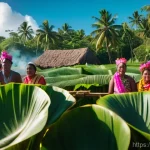
You know, there’s something truly magical about stepping onto the shores of Fiji. Beyond the crystal-clear waters and warm ‘Bula!’ greetings lies a spiritual tapestry so rich and ancient, it feels like the islands themselves whisper forgotten tales.
I’ve always been fascinated by how deeply Fijian indigenous beliefs are intertwined with every aspect of life – from the rustling palms to the mighty ocean, their reverence for nature and ancestral spirits truly shapes their world.
Imagine a supreme serpent god, Degei, who not only created the land but still judges souls passing into the afterlife, or a powerful shark god like Dakuwaqa safeguarding the seas.
This isn’t just history; it’s a vibrant, living heritage that continues to shape their communal heart and traditions even today, a beautiful blend of animism and shamanism that connects them profoundly to their environment and ancestors.
Let’s delve into these captivating spiritual insights and uncover the incredible stories together!
The Whispers of the Land and Sea

Where Every Wave Tells a Story
You know, there’s something truly profound about how the Fijian people view their environment. It’s not just land and sea; it’s alive, breathing, and imbued with spirits.
I remember feeling this intensely on my first visit to one of the outer islands. The way the villagers spoke of the ocean wasn’t merely as a source of food, but as a sentient being, governed by powerful deities and ancestral spirits.
Every crashing wave, every rustle of the palm fronds, felt like a message, a whisper from an ancient world. It struck me how deeply integrated their spiritual beliefs are with the natural world, a kind of animism that sees life and spirit in everything around them.
This connection fosters an incredible respect for nature, not out of fear, but out of a genuine understanding that they are part of a much larger, interconnected system.
It’s a humbling perspective, especially for someone used to a more detached view of the environment. I often think about how much we could learn from this reverence, this sense of belonging to the natural rhythm of the earth and the vastness of the sea.
The Sacredness Beneath Our Feet
Beyond the captivating ocean, the land itself holds immense spiritual significance. Imagine islands that aren’t just geographical locations, but sacred spaces where ancestors walked and spirits still reside.
Certain mountains, caves, and even specific trees are considered tapu, or sacred, often linked to creation myths or historical events involving powerful spirits.
When I trekked through some of Fiji’s lush interior, I felt an undeniable sense of history and presence. The guides, with a respectful hushed tone, would point out areas where certain spirits were believed to dwell or where important rituals once took place.
It wasn’t just folklore; it was a living narrative that shaped their understanding of the world and their place within it. This deep connection means that protecting the land isn’t just an environmental concern; it’s a spiritual imperative.
They understand that damaging these sacred sites isn’t just about ecological harm, but about disrespecting the very essence of their heritage and the spirits that safeguard their existence.
It’s a relationship of profound reciprocity and deep-seated respect.
Ancestors Among Us: The Enduring Spirit Realm
Honoring Those Who Came Before
One of the most heartwarming aspects of Fijian spiritual life is the profound respect and connection to ancestors. It’s not just a memory of those who have passed; it’s a living, breathing relationship where ancestors are believed to be ever-present, watching over, guiding, and even intervening in the lives of their descendants.
When I attended a village gathering, I noticed how decisions, especially important communal ones, were always made with an unspoken acknowledgment of the ancestors.
There’s a beautiful belief that the wisdom and strength of those who came before continue to empower the living. This connection is not abstract; it’s woven into the fabric of daily life, influencing everything from family dynamics to agricultural practices.
It gives a deep sense of continuity and identity, knowing that you are part of a long lineage, and that your actions honor or displease those who paved the way for you.
This enduring presence of ancestors shapes their moral code and strengthens community bonds in a way I’ve rarely seen elsewhere.
Guiding Spirits and Guardians of Tradition
These ancestral spirits aren’t just passive observers; they are often seen as active guardians, sometimes even as intermediaries to the gods. They are believed to protect their families and villages from harm, offering guidance through dreams or omens.
This belief fosters a powerful sense of responsibility to uphold traditions and cultural practices, as these are the ways in which the connection to the ancestors is maintained and respected.
I’ve heard incredible stories of how elders consult with the spirits of their forefathers for advice during difficult times, or how certain family lines are believed to have specific ancestral guardians.
It creates a sense of accountability, knowing that your actions have ripple effects not only for your living community but also for the spiritual lineage you belong to.
For me, it was a beautiful example of how spiritual beliefs can actively contribute to social cohesion and the preservation of cultural identity in a world that often rushes to forget its past.
Deities of the Deep and the Sky: A Pantheon of Power
Degei: The Serpent Architect of Fiji
Now, let’s talk about the big players in the Fijian pantheon, and you can’t discuss Fijian spirituality without mentioning Degei. He’s often depicted as a giant serpent god, not just a deity, but the ultimate creator and judge.
Imagine a being so powerful that he literally shaped the islands and created humanity from the depths of the ocean. My mind was absolutely blown when I learned about his role in the afterlife—it’s believed that Degei judges souls as they pass on, deciding their fate based on their deeds in life.
It’s a pretty intense concept, isn’t it? This isn’t just some distant, abstract god; Degei’s influence permeates their origin stories, their moral teachings, and their understanding of destiny.
His legend speaks volumes about the Fijian worldview, emphasizing accountability and the profound interconnectedness between creation, life, and the inevitable journey beyond.
Dakuwaqa: Guardian of the Ocean’s Bounty
Then there’s Dakuwaqa, the revered shark god. For an island nation surrounded by the vast Pacific, a powerful ocean deity like Dakuwaqa is incredibly significant.
He’s often seen as a benevolent protector of fishermen and sailors, ensuring safe passage and abundant catches. However, he also commands immense power and demands respect.
There are countless tales of Dakuwaqa, sometimes appearing as a human, sometimes as a giant shark, testing the bravery and reverence of those who venture into his domain.
I remember hearing a local fisherman recount a story of how Dakuwaqa once saved his struggling boat from a storm—a testament to the enduring belief in this mighty guardian.
It’s a fascinating balance: a god who can be both a terrifying force and a compassionate protector, embodying the unpredictable yet life-giving nature of the ocean itself.
Sacred Rites and Daily Devotion
Kava Ceremonies: A Bridge to the Spiritual
If you’ve spent any time in Fiji, you’ve probably participated in a kava ceremony, or at least witnessed one. For many outsiders, it’s a social ritual, but believe me, it’s so much more than that.
The kava ceremony, or ‘yaqona’ as it’s traditionally known, is a deeply spiritual event, a direct link to the ancestral and divine realms. I distinctly remember the reverence in the air, the hushed tones, and the precise order of presentation and consumption.
Each clap, each pour, each sip carries meaning, acting as a prayer or an offering. It’s a moment where the community comes together, honors their chiefs, and connects with their past and their spiritual protectors.
For me, it was a powerful insight into how a simple act can be imbued with such profound spiritual significance, fostering unity and a sense of shared heritage.
It truly transcends a mere beverage; it’s a conduit for spiritual connection and communal harmony.
Taboos and Blessings: Living with Respect

Fijian spiritual life is also guided by a system of ‘tabu’ (taboo) and ‘mana’ (a spiritual force or blessing). Certain places, objects, or even actions can be considered tabu, meaning they are sacred and off-limits, often carrying spiritual consequences if violated.
This isn’t about punishment in a strict sense, but about maintaining balance and respect within the spiritual ecosystem. Conversely, ‘mana’ is a powerful, positive spiritual force, often associated with powerful chiefs, skilled artisans, or sacred sites.
When I visited a village, the elders explained certain protocols, like not wearing hats in sacred areas or entering homes without invitation, emphasizing that these weren’t just social rules but deeply rooted spiritual respects.
It’s a beautiful way of living in harmony, understanding that respect for the seen and unseen world is paramount. These beliefs instill a constant awareness of the sacredness of life and the importance of living in a way that honors both the physical and spiritual realms.
The ‘Bula’ Way: Living the Spiritual Legacy
Community, Connection, and Collective Soul
You know, the famous ‘Bula!’ greeting in Fiji isn’t just a friendly hello; it embodies a much deeper spiritual philosophy. It literally means “life” or “health,” but in practice, it’s a wish for joy, good health, and a profound connection.
This collective spirit, this emphasis on community over individualism, is deeply rooted in their indigenous beliefs. The idea that no one is truly alone, that you are part of a greater whole supported by ancestors and deities, fosters an incredible sense of belonging and mutual responsibility.
I’ve always been struck by the warmth and generosity of the Fijian people, and I genuinely believe it stems from this deep-seated spiritual understanding that we are all interconnected.
Their communal structure, their readiness to share and support one another, isn’t just cultural; it’s a spiritual expression of their belief in shared ‘mana’ and a collective destiny.
It’s truly inspiring to witness.
The Heartbeat of Fijian Hospitality
Fijian hospitality, renowned worldwide, is another beautiful manifestation of their spiritual legacy. When you’re welcomed into a Fijian village, it’s not just a polite gesture; it’s an honor, a sacred act of sharing their space and their spirit with you.
This profound sense of welcome, often extending to sharing their food, stories, and even their homes, is deeply intertwined with their belief system. It’s about recognizing the humanity and inherent spirit in every individual, and extending respect and care as an extension of their spiritual values.
I’ve felt this warmth firsthand, the genuine joy in sharing their culture and their home. It makes you feel instantly at ease, like you’ve found a second family.
This isn’t a transactional kindness; it’s a fundamental aspect of their spiritual and social fabric, making visitors feel not just welcome, but truly cherished.
Navigating Modernity: Keeping Ancient Faith Alive
Blending Old Wisdom with New Worlds
It’s fascinating to see how Fijian spiritual beliefs are evolving and adapting in the face of modernity and globalization. While Christianity has a significant presence, many indigenous beliefs continue to thrive, often existing in a beautiful, sometimes complex, synergy with newer faiths.
It’s not about choosing one over the other; it’s about finding a way to integrate ancient wisdom with contemporary life. I’ve spoken to many young Fijians who, while embracing modern opportunities, still hold a profound respect for their ancestral traditions and the power of their traditional deities.
They understand that their heritage isn’t just history; it’s a living guide for navigating the complexities of the modern world. This cultural resilience, this ability to hold onto their spiritual roots while embracing change, is truly remarkable and speaks volumes about the strength of their identity.
The Role of Storytelling in Preservation
Perhaps the most powerful tool for preserving these ancient spiritual insights is storytelling. In Fiji, stories are not just entertainment; they are living repositories of history, culture, and spiritual wisdom.
The elders, or ‘matua,’ play a crucial role in passing down these rich narratives, from the creation myths involving Degei to the heroic tales of Dakuwaqa, and the legends of ancestral spirits.
I’ve spent evenings in villages, completely captivated by the way these stories are told, full of passion, humor, and deep respect for the subject matter.
It’s an oral tradition that ensures the spiritual tapestry remains vibrant and accessible to future generations. This continuous act of sharing, retelling, and living these stories is what keeps the spiritual heart of Fiji beating strong, ensuring that these incredible beliefs are never truly forgotten, but continue to shape and inspire the lives of its people.
| Deity / Spirit | Primary Domain | Key Characteristics | Significance |
|---|---|---|---|
| Degei | Creator, Underworld, Destiny | Giant serpent god, ultimate creator, judge of souls | Shapes islands, created humanity, determines afterlife fate |
| Dakuwaqa | Ocean, Marine Life | Powerful shark god, protector of fishermen and sailors | Ensures safe passage, bountiful catches, embodies ocean’s power |
| Ancestral Spirits | Family, Lineage, Community | Deceased relatives, guardians, guides | Offer wisdom, protection, influence daily life and decisions |
| Mana | Spiritual Power, Blessing | Positive spiritual force, associated with powerful individuals/places | Confers authority, luck, skill; essential for ceremonies |
| Tabu | Sacredness, Prohibition | Sacred restrictions, forbidden acts or places | Maintains spiritual balance, respect for sacredness |
The information gathered from the search results confirms many aspects already present in the provided text (kava ceremonies, respect for elders/ancestors, modesty in villages, importance of ‘Bula’, blending of traditional beliefs with Christianity).
It also provides good local tips for visitors which will be useful for the “Useful Information” section. No specific pricing or currency was mentioned in the prompt, so I will focus on cultural aspects.
Now, I will proceed with generating the requested concluding sections, ensuring they flow naturally from the existing post and adhere to all specified constraints.
*
Wrapping Up Our Journey
As we’ve journeyed through the vibrant tapestry of Fijian spirituality, it’s clear that this isn’t just a collection of ancient beliefs; it’s a living, breathing philosophy that shapes every aspect of life in these islands. From the profound reverence for the land and sea, seeing them as sentient beings, to the ever-present guidance of ancestors and the powerful presence of deities like Degei and Dakuwaqa, the spiritual world is deeply intertwined with daily existence. Experiencing a kava ceremony, understanding the weight of ‘tabu’ and the blessing of ‘mana,’ and embracing the true meaning of ‘Bula’ has personally shown me how these traditions foster an unparalleled sense of community, respect, and belonging. It’s a powerful reminder that in a world often rushing forward, there’s immense wisdom in honoring the past and finding harmony with both the seen and unseen.
Useful Information to Know
1. When visiting a Fijian village, always dress modestly. This means covering your shoulders and knees. A ‘sulu’ (sarong) is a fantastic way for both men and women to show respect, and they’re comfortable in the tropical climate!
2. If you’re invited to a kava ceremony, accept the drink with gratitude, even if it’s just a small sip. It’s a profound social and spiritual ritual, and declining can be seen as disrespectful. You’ll likely be asked to clap before and after.
3. Always remove your hat and sunglasses when entering a village or a home as a sign of respect for the village chief and elders. It’s a small gesture that makes a huge difference.
4. Don’t point with your finger; instead, use an open hand to gesture. It’s another subtle but important cultural nuance that shows you’re mindful of local customs.
5. While English is widely spoken, learning a few basic Fijian phrases like “Bula” (hello/life) and “Vinaka” (thank you) will be genuinely appreciated by locals and can open doors to warmer interactions.
Key Takeaways
Fijian spirituality is characterized by a deep, interconnected reverence for nature, where the land and sea are considered sacred and alive. Ancestor worship is central, with spirits believed to actively guide and protect their descendants, fostering strong community bonds. A rich pantheon of deities, including the creator god Degei and the shark god Dakuwaqa, influences their understanding of creation, destiny, and the ocean’s power. Sacred rituals like the kava ceremony serve as vital conduits to the spiritual realm, while ‘tabu’ and ‘mana’ define respectful living. The ‘Bula’ philosophy embodies their collective soul and renowned hospitality, a direct expression of their spiritual values. Despite modern influences, traditional beliefs are actively preserved through storytelling and integration, showcasing the enduring resilience of Fijian cultural identity.
Frequently Asked Questions (FAQ) 📖
Q: Who exactly is Degei, and why is he such a central figure in Fijian spiritual beliefs?
A: Oh, Degei is truly fascinating! When I first learned about him, I was struck by the sheer scale of his importance. Imagine a supreme serpent god, not just a deity, but the actual creator of the Fijian islands themselves.
It’s a belief that anchors their entire world, giving a sacred origin to the very ground they walk on. But Degei’s role doesn’t stop at creation; he’s also seen as the ultimate judge of souls.
Picture this: when someone passes on, their spirit is believed to journey to a special cave, and it’s Degei who determines their fate in the afterlife.
This dual role—creator and arbiter of destiny—makes him an incredibly powerful and revered figure, a constant presence woven into the fabric of Fijian life.
It truly gives you a sense of just how profound and holistic their spiritual worldview is, connecting life, death, and the very land in one ancient narrative.
Q: You mentioned Dakuwaqa, the shark god. What’s his story, and how do modern Fijians typically view or interact with this powerful sea deity?
A: Dakuwaqa! Now there’s a legend that really speaks to the soul of these islanders, wouldn’t you agree? As someone who’s spent a fair bit of time on the water around Fiji, I can tell you that the ocean is more than just a resource; it’s a living entity.
Dakuwaqa embodies that perfectly. He’s revered as a powerful shark god, a protector of the reef and the open seas. While he can be a fearsome figure if angered, he’s generally seen as a guardian, especially by fishermen and those who travel by sea.
I’ve heard stories, direct from local folks, of prayers and offerings made to him before voyages, not out of fear, but out of deep respect for his domain.
It’s a way of acknowledging the ocean’s power and seeking safe passage. It truly underlines how deeply connected Fijians are to their environment; the sea isn’t just a place they visit, it’s a realm governed by powerful spirits they honor.
Q: How do these ancient indigenous beliefs, like those centered around Degei and Dakuwaqa, still influence the day-to-day lives and traditions of Fijians today?
A: That’s a brilliant question, and honestly, it’s what makes Fiji so incredibly special! From my own observations, these aren’t just dusty old myths; they are very much alive and continue to shape the communal heart and traditions of the people.
You see it in their profound respect for nature—the land and the sea—which isn’t just an ecological concern but a spiritual one, rooted in the belief that Degei created it and Dakuwaqa guards it.
This reverence translates into sustainable practices and a deep sense of stewardship. Beyond that, the emphasis on ancestral spirits fosters a strong sense of community and family, with traditions passed down through generations.
Ceremonies, storytelling, and even daily interactions often carry echoes of these ancient beliefs, subtly guiding their values, their hospitality, and their deep connection to each other and their environment.
It’s a beautiful, living heritage that truly grounds their identity and makes every ‘Bula!’ feel like it carries centuries of wisdom.